Start Your Sketchbook with 10 Tips
10 Simple Ways to Overcome Blank Page Anxiety and Start Your Sketchbook
Since you're here, I'm guessing you've opened your sketchbook lately. Or maybe you've been thinking about starting one… but something is holding you back.
Is the blank page staring at you? Does it feel an intimidating because you're afraid of messing up? Maybe you’re thinking what you make might not meet your expectations?
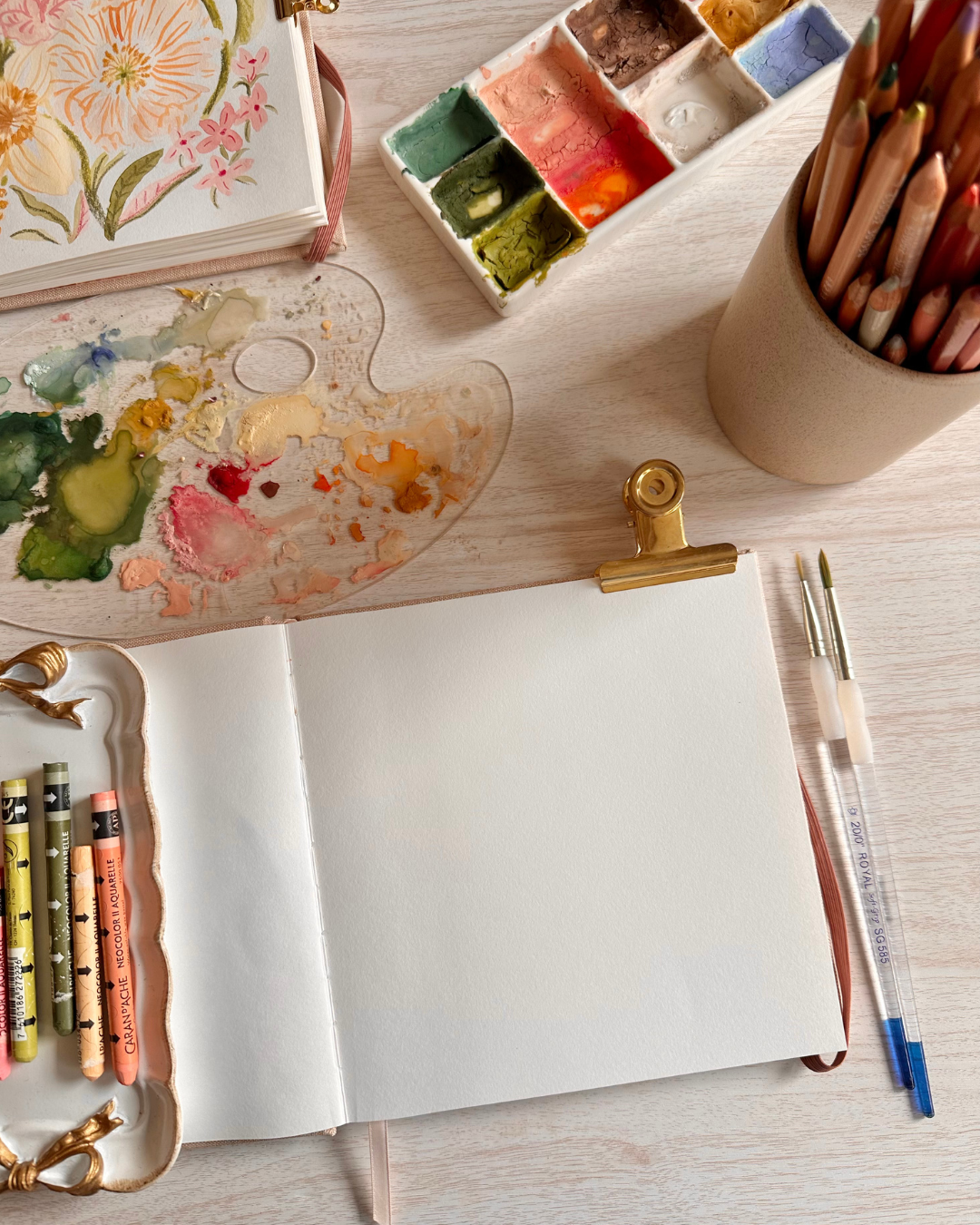
If you're dealing with blank page anxiety, you're not alone!
Especially the first page of a sketchbook, it can feel strangely paralyzing. I've talked to so many creatives about sketchbook anxiety, and I hear it all the time. (Even I experience it everytime I start a brand new sketchbook or once in a while on a new blank page! 😂)
That untouched page makes your hand freeze…. your mind fills with "what ifs." Suddenly, drawing feels harder than it should. 😅
Here’s what I want you to know….that fear doesn’t mean anything is wrong with you. It’s incredibly common, especially as adults, because we’ve learned to judge ourselves in ways we never did as kids! Have you ever watched a child draw with crayons? It’s usually not too long and they’ve created their next masterpiece for mom’s refrigerator.
Now, I want to let you know that—you don’t need more confidence or willpower to get started. But you need to give yourself permission to start. * Take a deep breath * and decide that you’re allowed to make a mess. That you’re allowed to make marks, to play, to loosen your grip on expectations, and to enjoy the simple act of creating! 🎨
Well… I wish it was that easy 😂!
So here are 10 simple exercises I’ve put together to help you fight off those scaries and start drawing! These little tips and tricks have helped me overcome that pristine white page, and I hope they'll help you too. Let's get started!
Why the First Page Feels So Scary?
It's a pretty universal experience. There's something about that pristine, untouched first page of a sketchbook that makes our standards skyrocket. Maybe we imagine it filled with beautiful art. Or we romanticize showing it to a friend someday for praise. We quietly decide that the beginning must to be perfect.
That blankness feels precious. And when something feels precious, it turns into pressure.
Here's what I've learned from my own sketchbook practice: the first page isn't actually special. It just feels that way because we've made it that way in our minds. But once you move past it, the rest of the book suddenly feels more open and forgiving.
So here are some tricks I've personally used to overcome that first page anxiety:
1. Skip the First Page Entirely
Yep, that's right. Just turn the page and skip it. (no joke)
This is my most-used trick to date. I simply start on page two or three. 😌
Then, after I finish the entire sketchbook, I go back to the first page as the last one I fill in. Once the sketchbook is already lived in and imperfect, it gets so much easier to draw on that first page!
There's also something freeing about knowing you can come back to it later, when the sketchbook has already proven it doesn't need to be perfect to be worthwhile.
2. Let Someone Else Break the Seal
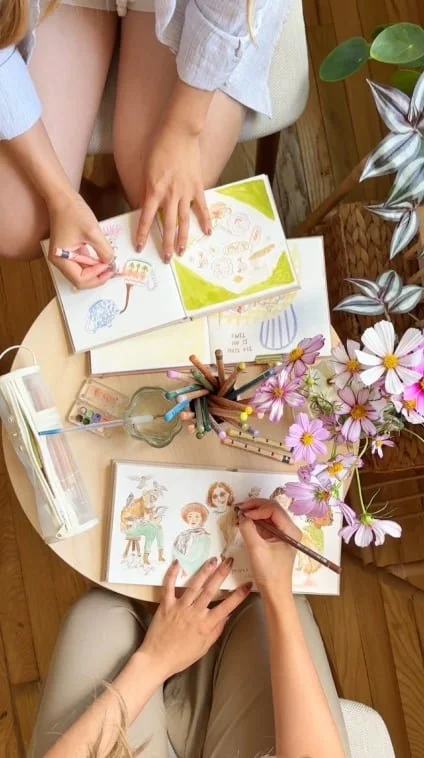
This tip was a learning from an unexpected incident, and it completely changed how I thought about sketchbooks.
STORY TIME! So I had a brand new sketchbook sitting on my table (it was my first prototype of The Drawing Diary we know and love today), and I hadn't touched it yet. You know how it goes. It felt too precious. It cost me an arm and a leg, and it was too beautiful to mess up. 🥹
An acquaintance came over… saw it, and thought it would be cute to autograph it. Yes. Just picked it up and signed it. 🤬
At first, I was honestly upset. That sketchbook felt ruined. I had been saving it for the "right" moment.
But then something shifted. If it was already "ruined," there was nothing left to protect…. so I started drawing in it. And it became one of my most-used, most-loved sketchbooks!
You don't have to experience what I did but you could make a random mark or you could ask someone to make that first mark for you!
3. Crumple the Page
This may sound like an abomination, but I dare you to mess up your page on purpose. 😜
Similar to letting someone else break the seal, crumpling your paper changes the way you think about your sketchbook entirely. Now it's not precious anymore. It's a place to experiment, to play, to paint over, to make mistakes. It's intentionally imperfect. And suddenly, all that pressure? Gone.
There's something about a wrinkled page that says, "This book is for creating, not preserving." It gives you permission to treat it like a playground instead of a museum.
So go ahead. Crumple it. Smooth it back out. Then draw!
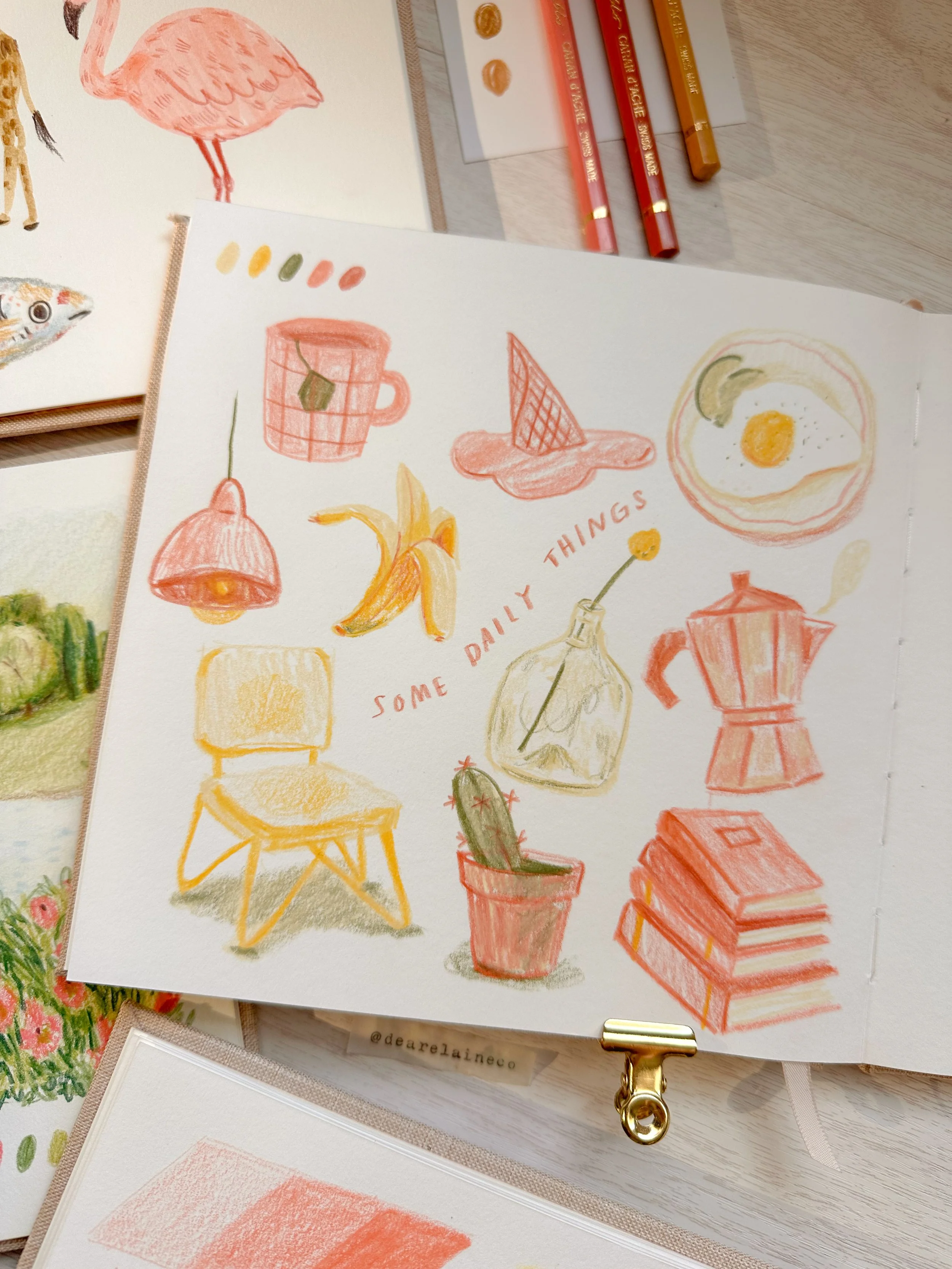
4. Draw Something You Already Like to Draw
If you love flowers, draw a flower. If you enjoy simple shapes, paint simple circles or triangles. If color feels easier than drawing, make that page your swatch page!
It doesn’t need to be something impressive. Just something that feels comfortable.
When you draw what you already enjoy, it stops being about performance and starts feeling more like play. You’re not proving anything. You’re just putting something you like onto paper.
5. Write the Date and One Sentence
If drawing feels like too much, then don't draw.
Write the date. Write one sentence about your day, how you're feeling, or why you bought this sketchbook.
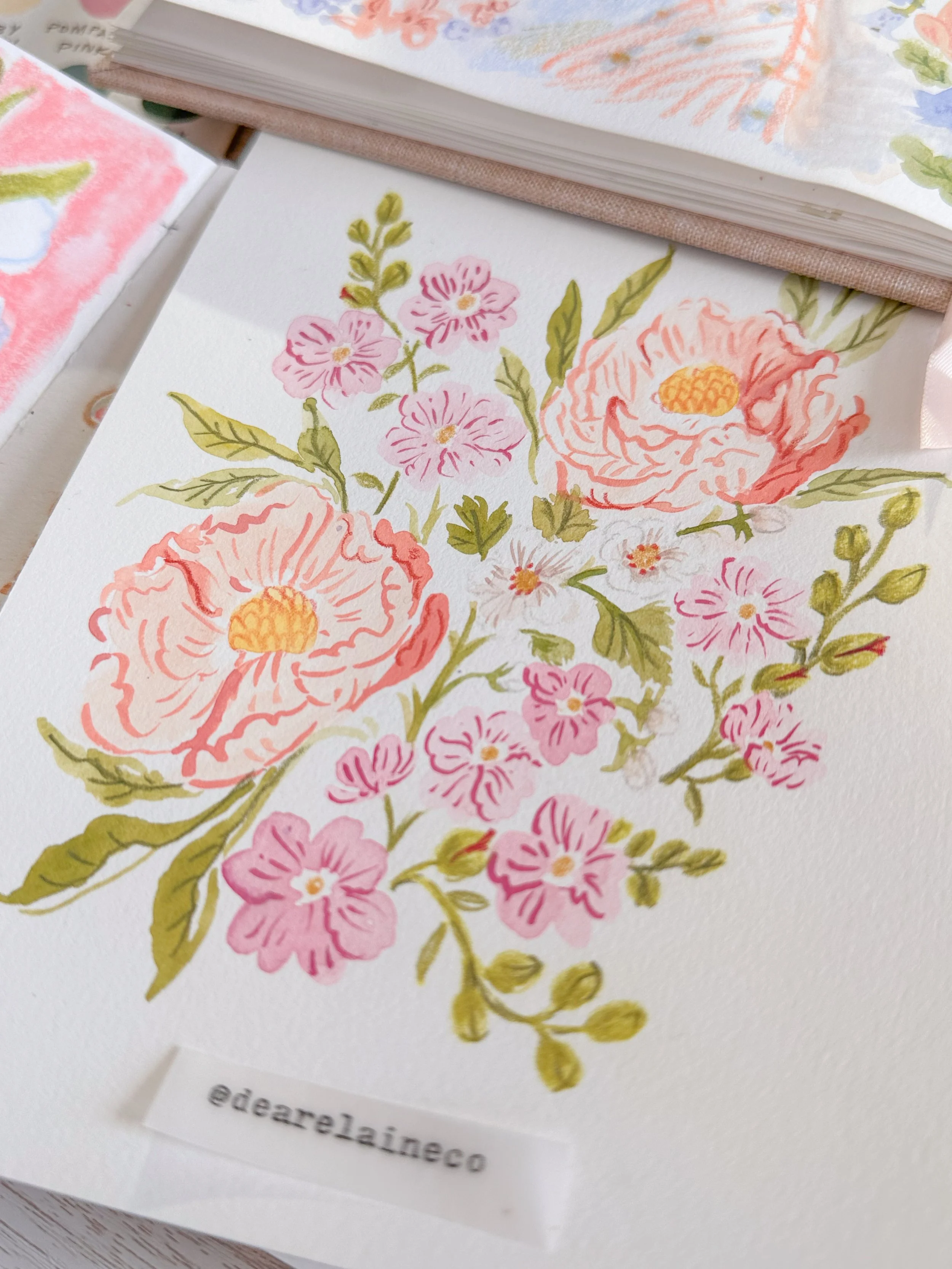
You could also write a quote that reminds you creating doesn't have to be polished to matter. It still counts since it breaks the seal! And it's very low pressure.
Words belong in sketchbooks just as much as images do, and sometimes they're easier to start with. Maybe that line helps lead you to imagery, and then you'll be drawing in no time.
And listen, don't worry about messy handwriting or writing your best. Just write.
6. Start with Something Very Simple
Tracing your hand works. So does drawing a square, a circle, or a plain mug.
It might feel silly, but simple marks require almost no decision-making. You’re just getting your hand moving. You’re reminding yourself that the page can handle a mark without anything bad happening.
Some of my favorite sketchbooks start with the most ordinary drawings. A coffee cup. A pen. My shoe. What matters is not what you drew. What matters is that you began. ☺️
7. Paint Your Mood in Five Colors
Pick five colors. Any five. Then paint your mood on that first page. Let the colors blend into each other. Let them bleed and mix. Don't plan it. Don't control it. Just play.
Think of it as a warm-up, not a masterpiece. This is permission to be loose, to discover what happens when you stop overthinking and just let the paint move.
And here's the best part: if you end up hating your page, you can always give it a second life by painting a layer of gesso or gouache over it later. It's not permanent. It's just practice.
But I hope that over time, your sketchbook becomes a place where you learn to love the messy pages just as much as the pretty ones.
8. Glue Something In
Glue in a receipt, a gift tag, or a movie ticket. Add a polaroid, a scrap of paper, or a piece of washi tape. Tear something from a magazine and stick it down.
Collaging counts too! It doesn't all have to be drawing. Maybe this opens up new creativity and discovery for you.
Once something is already on the page, adding to it feels less intimidating. The materials make the page feel smaller and do some of the visual work for you. All you have to do is respond.
9. Doodle a Border
Draw a simple border around the edge of your first page. Dots, lines, scallops, whatever feels easy. Or maybe go a bit more ornate. Think cottagecore vibes: tulips, swans, sparkles, or a viney plant crawling along the edges. It's just a border, right?
It's such a low-stakes way to make that first mark. And once the border is there, the page suddenly feels like it has a frame. A container. A little invitation to fill the middle.
You've already started. The rest feels easier. 😉
10. Set a Five-Minute Timer
Tell yourself you only have to draw for five minutes. That's it. ⏱️
Set a timer. Draw what's in front of you. Keep it simple. No pressure to make it perfect. When the timer goes off, you're allowed to stop. Often, you won't want to. But if you do, you've still started. And that's what matters.
From teaching beginners, I've seen how helpful small time limits can be. They keep you from overdoing it, but they also make you put a move on it. You simplify your strokes, let go of overthinking, and just get those thoughts on paper.
Five minutes is nothing. But it's also everything when you're staring down a blank page.
Lastly, Remember What a Sketchbook Is For…
Your sketchbook is a place to practice, explore, play, discover, and create. It's a place to think on paper. To try things out. So it's okay to be unsure or even to make a mess.
I remind my students of this often, because it's easy to forget. We start treating our sketchbooks like they're going to be judged by someone else’s eyes… but they’re not! Your sketchbook is just for you.
Your sketchbook holds your experience and your way of seeing. You get to decide whether it's about being perfect or about being honest.
Now, I do have to add this: my grandma treated her sketchbook like her most treasured book. Each page was thoughtfully illustrated and dated. She saw her improvements over time, and she was proud of every single page.
If you're a perfectionist like my grandma and you'd like to go that route, I recommend keeping multiple sketchbooks. One for techniques and messy exploration, then another for your polished illustrations, the ones where the rubber meets the road.
One to keep for your own ideas and private practice. And one to share, like my grandma did.
Both approaches are valid. You just have to know what serves you. ✨
Now What? What to Draw Once You’ve Started
You don't need a plan or a grand vision. You don't need a collection or a theme.
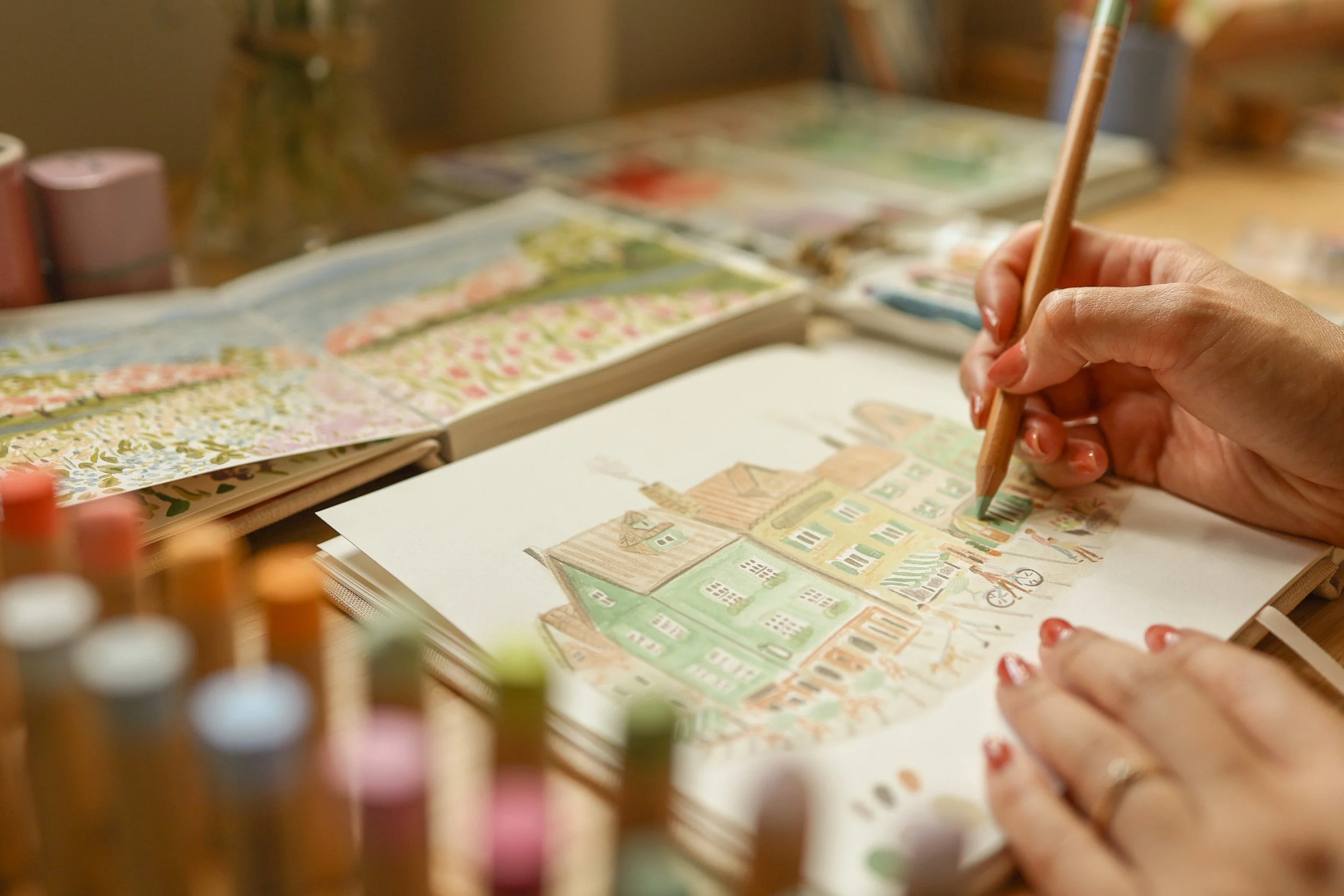
Just draw what's around you… A mug from your kitchen. A plant or leaf. A pretty street scene. Some animals. Some faces. Patterns and shapes are always fair game. Testing colors is useful too. Draw your hand. Your shoe. The corner of your desk. A spoon. The view from your window.
In my own practice, I've learned that what you draw matters far less than the act of drawing itself. Getting your hand moving is the whole point. 🖍️ Your sketchbook doesn't need to tell a story or look cohesive. It just needs to be used! So start simple. Start small. Start anywhere.
If You Need More Guidance
Sometimes reading tips isn't enough… if you’re a super visual person that learns best by watching / by seeing the creative process unfold and getting into the mind of another artist, I'd love to support you through one of my art classes! They're designed specifically for beginners and intermediate artists who want to get creative with simple & playful art exercises and guidance.
You'll find a variety of classes and workshops on subjects like nature, people, urban scenes, and more: here
P.S. You Don’t Have to Feel Ready
You'll probably never feel completely ready to start and the page may always feel a little intimidating. The first mark may always feel a bit risky…but here's the thing: everything gets easier with practice. And practice only happens when you begin.
So pick one of these ideas and try it today. Make a mark, however small or imperfect! Your sketchbook isn't asking for perfection. It's just waiting for you to start. 😉
xxx Elaine