What Is Gouache Paint? A Beginner's Guide

So, What Is Gouache Paint?
Traditional gouache (pronounced "gwaash," rhymes with squash 😉) is an opaque, water-based paint that dries to a flat, matte finish.
BUT *inserting caveat*: there isn’t just one way to use gouache paint!
I’ve been painting with gouache for several years now, and there are plenty of reasons why I use this as my main medium, but top of the list: I absolutely love it’s versatility.
This is the real charm of gouache. It’s like if acrylic paint and watercolor had a child: you’d get gouache, inheriting the best of both worlds. ☺️
Let me explain… since gouache is a water-based paint, it can give you transparency of watercolor with more dilution but when applied with less water then you’ll get that bold, velvety coverage that looks like acrylic paint.
No wonder beginners often ask: what’s the “right” way to use it?
It can be a little misunderstood at first because sometimes it feels like acrylic paint, so it’s easy to be unsure how much water to add… but add more water then suddenly it behaves like watercolor! Cool right?!
Just play with it a little and you’ll find it can look dreamy and translucent or rich and opaque. If you’re a visual learner, you can find my classes using gouache paint here.
Also one of Gouache’s superpowers is that you can reactivate it with water even after it dries, so you can lift, blend, and rework a layer hours or days later.
That kind of flexibility is one of the main reasons I keep using it in my art. Gouache gives me endless opportunities to explore, there are just so many ways to use it! It’s always fun to experiment and see what happens. 🎨
Fun fact: Before computers, gouache was the workhorse of the design world. Illustrators used it for advertising layouts, book covers, storyboards, and animation backgrounds, and in the U.S. the cheaper mass-produced version was literally sold as "poster paint."
Can you imagine hand-painting every single poster and magazine ad? 😳 Toulouse-Lautrec (one of my fave artists) used gouache for his Moulin Rouge posters!

A Comparison: Acrylic vs. Watercolor vs. Gouache
Let me show you a swatch example so you can see how each paint finishes on paper. Now you can see how gouache can mimic both acrylic and watercolor; depending on how much water you add.
See below for the comparison, W stands for Watercolor, G stands for Gouache and A stands for Acrylic:

In this swatch sample, I started at the top with very little water so you can see how opaque gouache can be. As I moved down, I added more and more water, which is where you start to see that transparency come through. And this isn't even the full range! The more water you add, the more it'll start to look like watercolor.
A Few Reasons You’ll love Gouache:
It’s forgiving. Messed up a flower petal? No problem! You can paint right over it once it dries or move around the color as its wet. You can even layer light colors on top of dark ones, just like acrylic.
It can behave like watercolor. Add more water and you’ll get those soft, dreamy washes. It’s not quite as flowy as traditional watercolor because it is a denser paint but you can still create beautiful transparent layers and gradients!
Matte beauty. Gouache dries with a velvety, matte finish that photographs and scans beautifully making it perfect for digitizing your work! Or just admire that soft, chalky texture on the page. 😌
Playful mixing. Personally, I think gouache loves company. You can mix it with colored pencils, pastels, ink, or even markers, making it one of the best mediums for mixed media experiments.
More unique qualities of gouache paint with visuals are on my freePDF gouache guide
Gouache Paintings in My Sketchbook
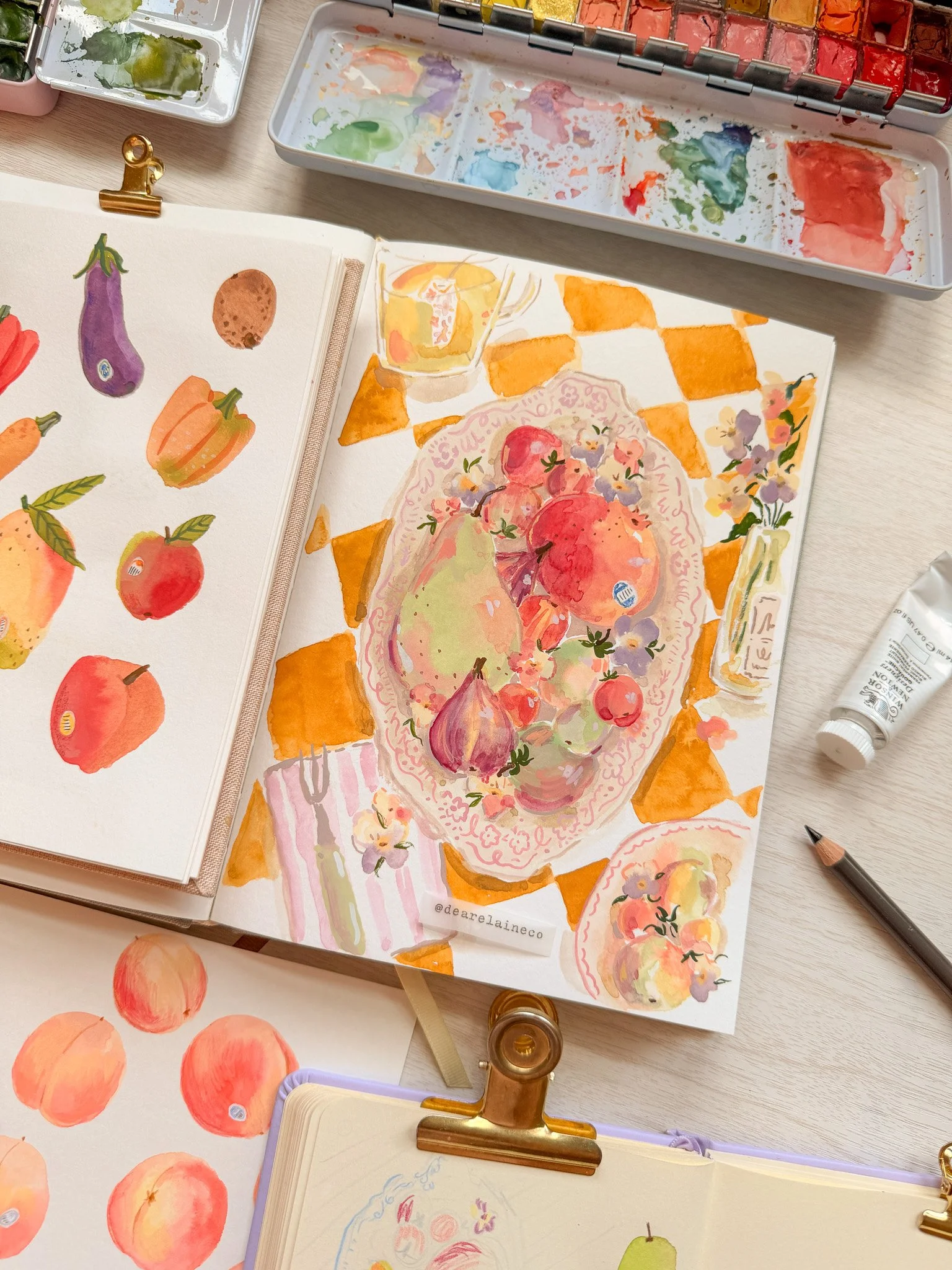
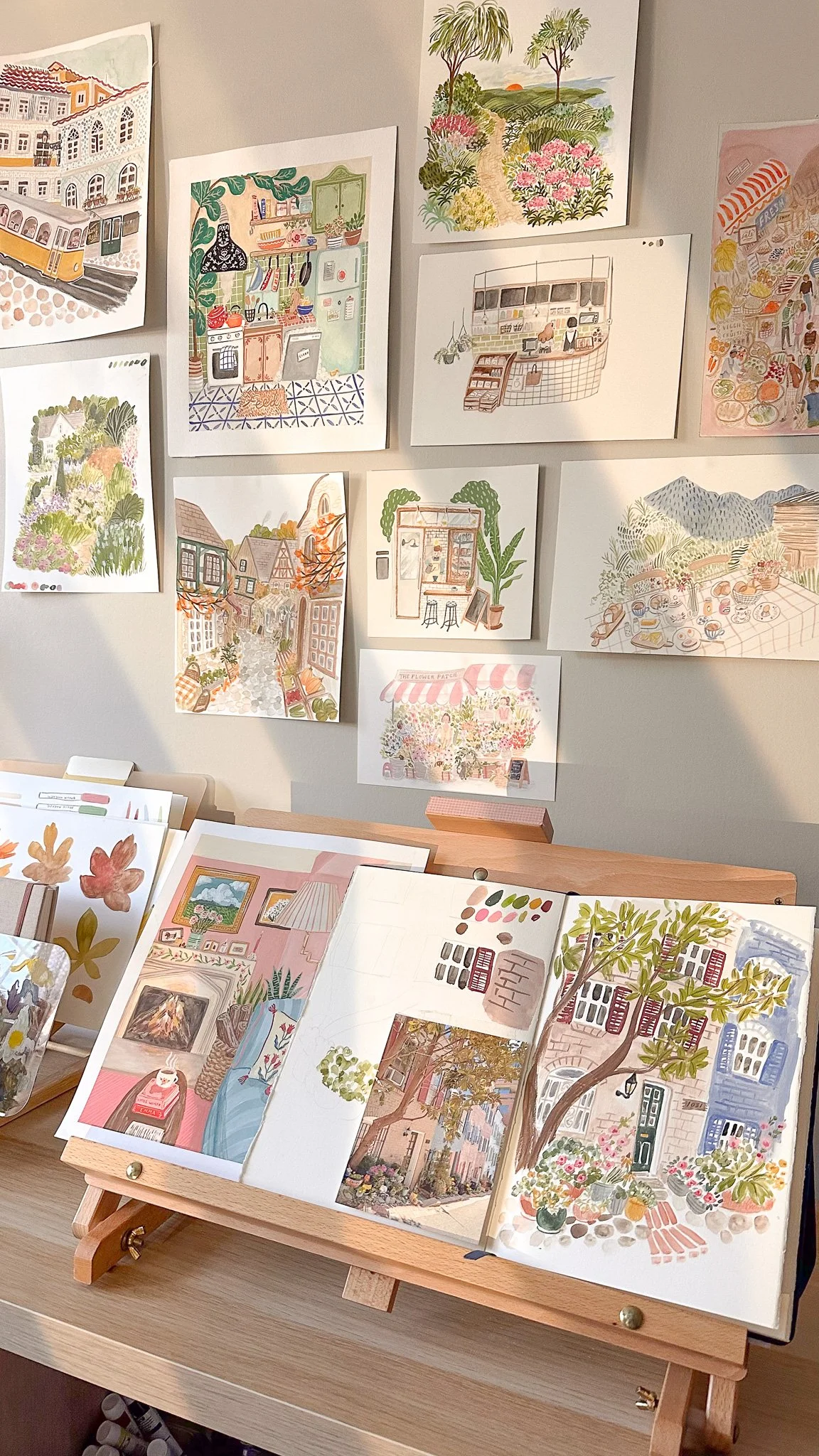
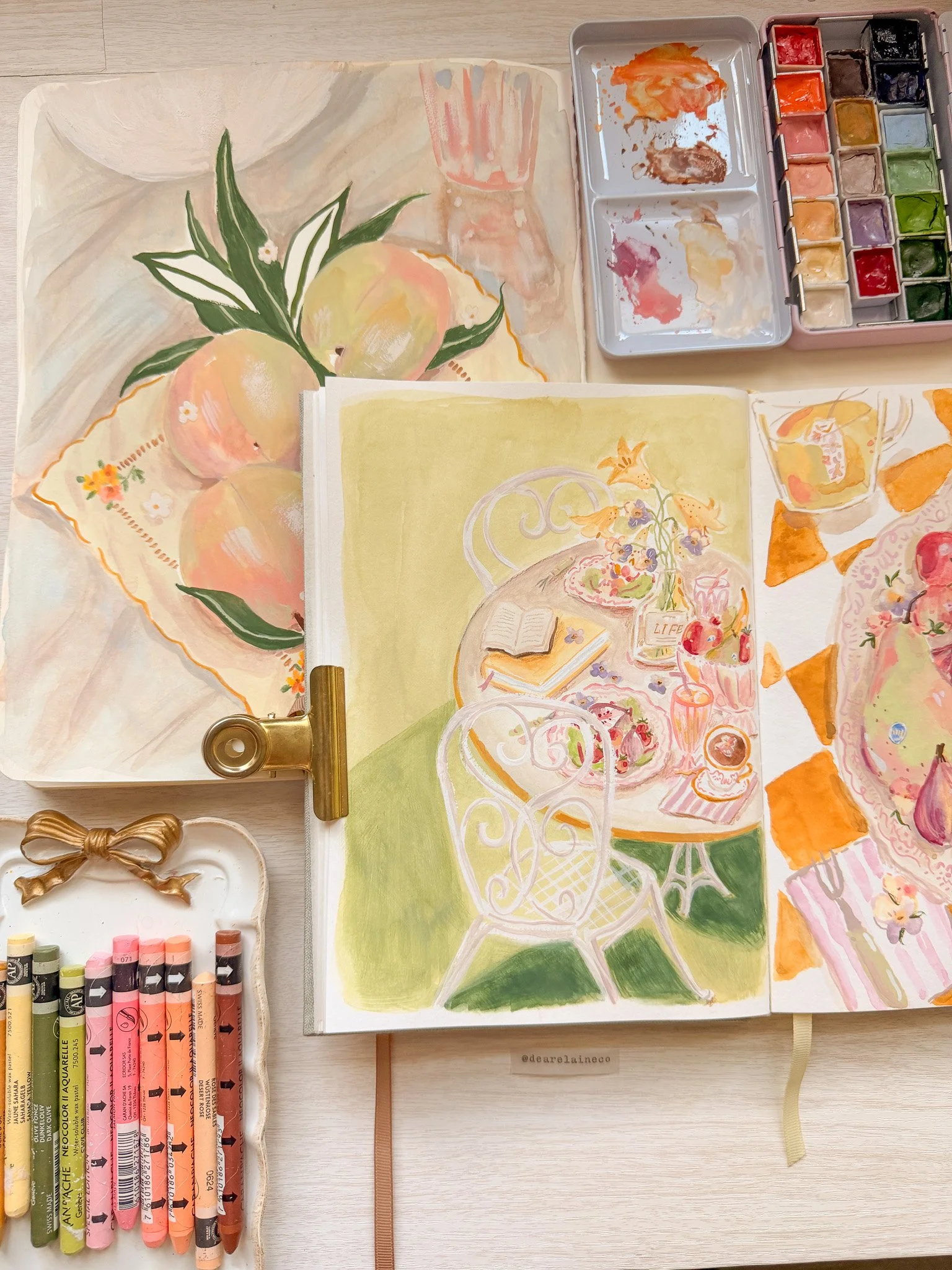
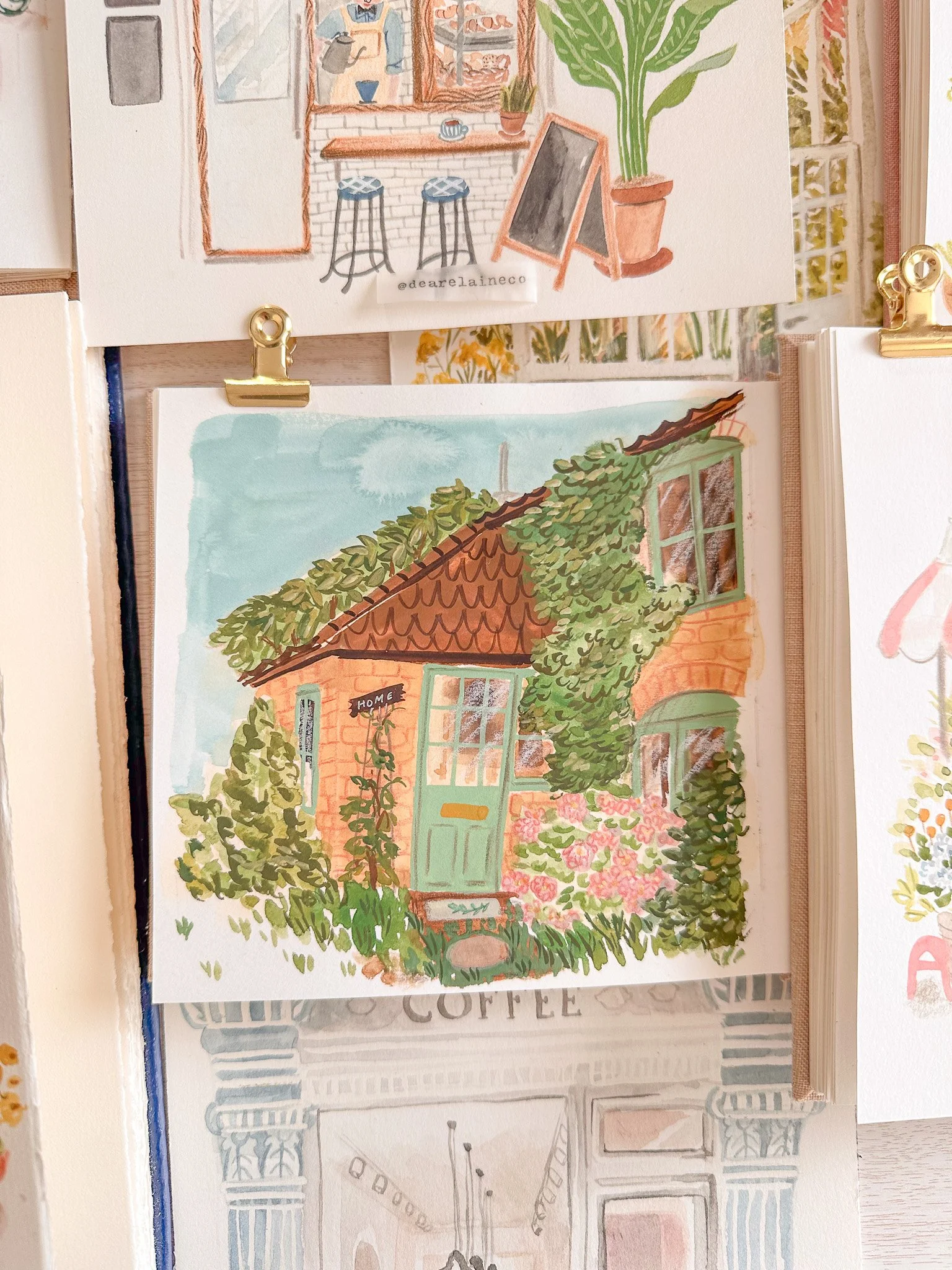
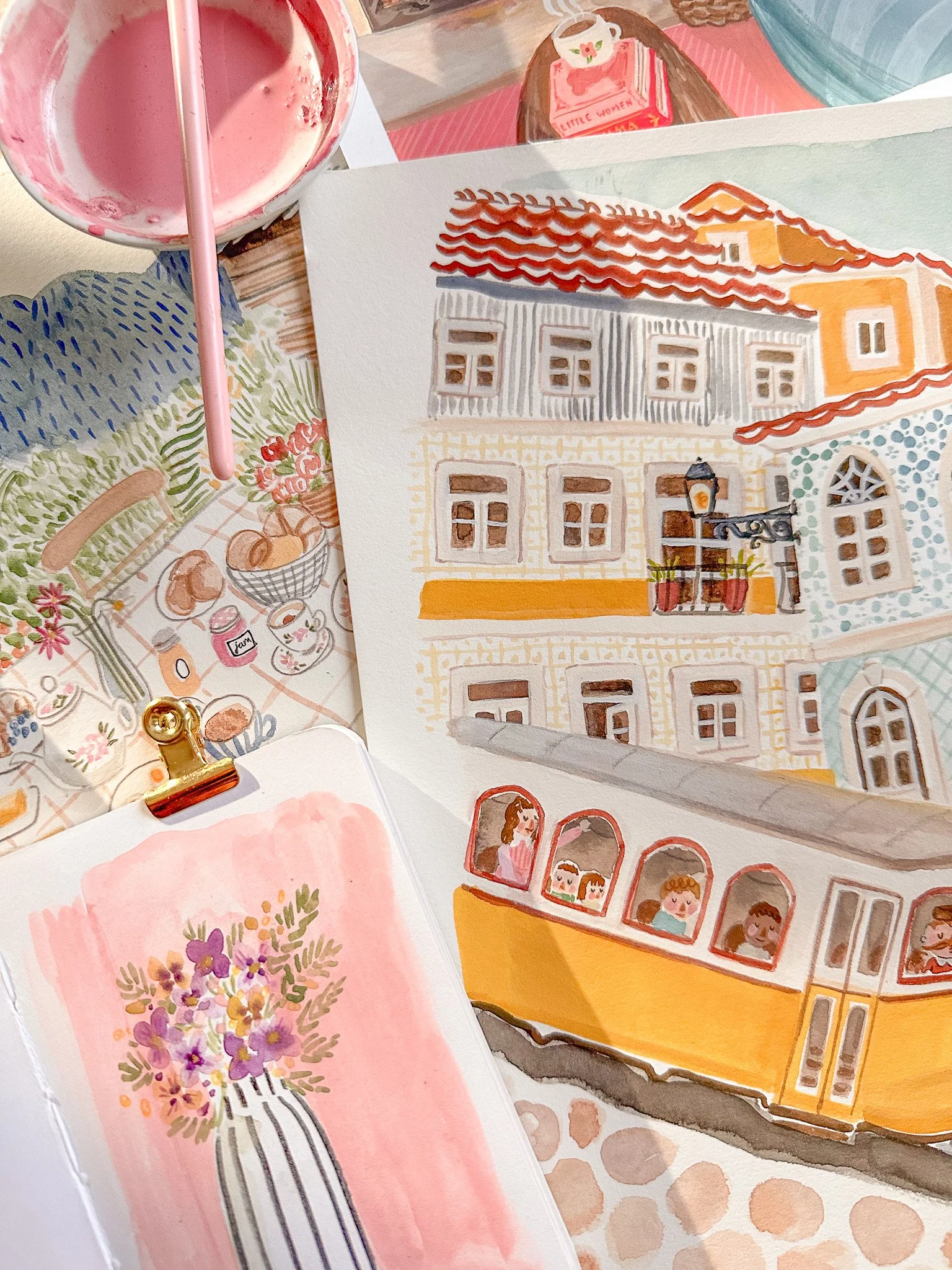
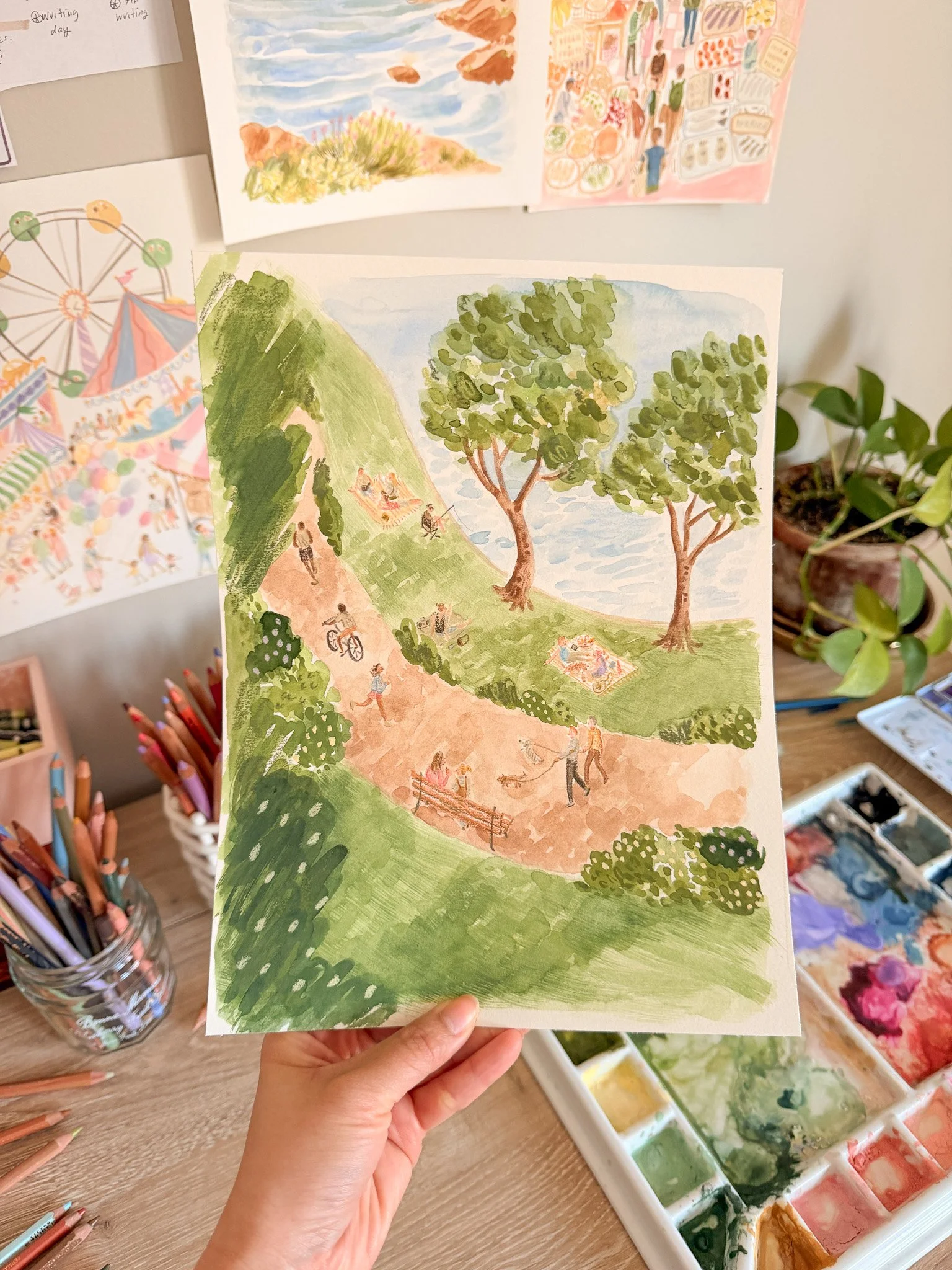
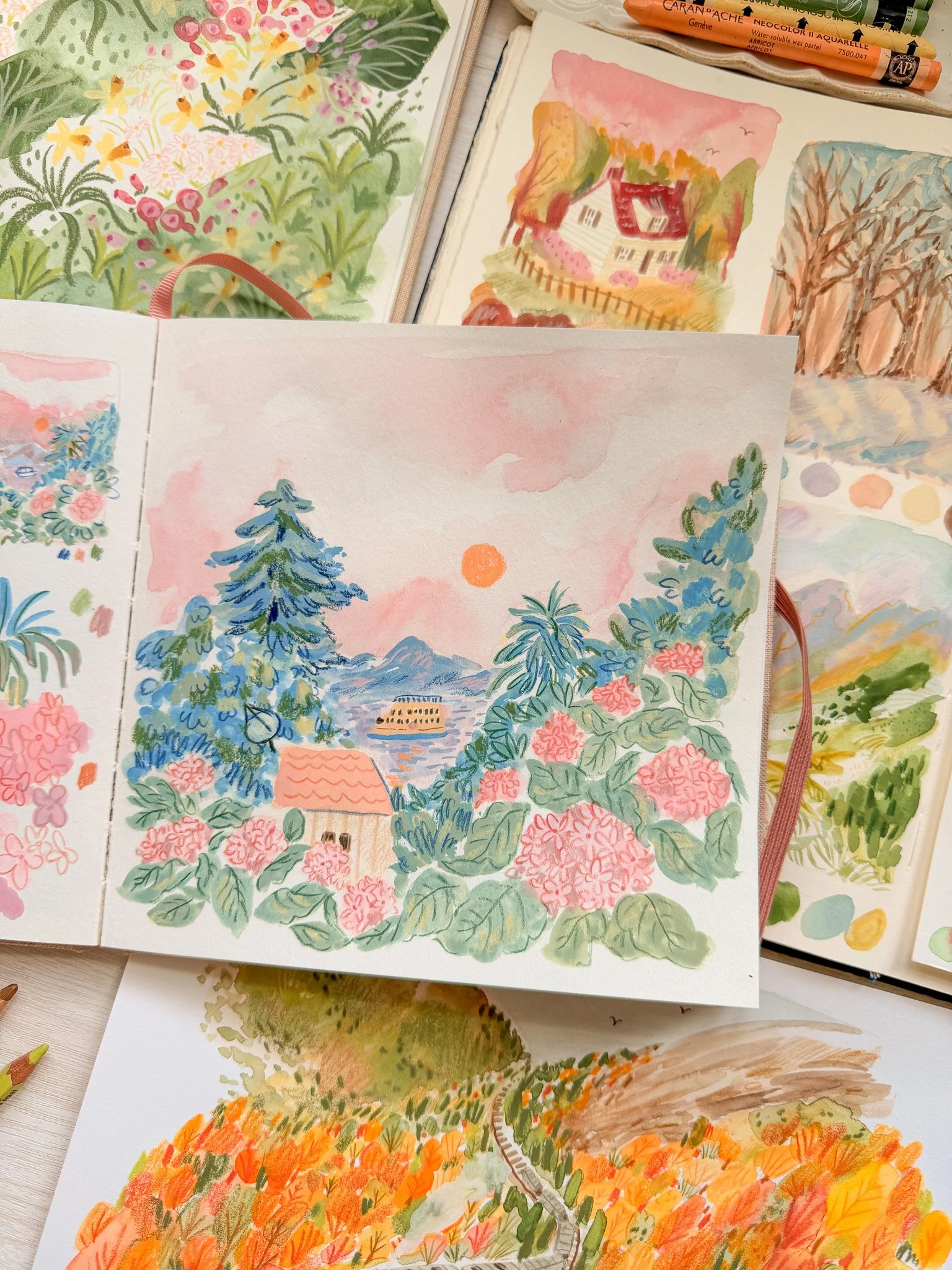
I get asked so often what paint I’m using. Most people just assume that I’m using watercolor but… SURPRISE it’s mostly gouache! If you’d like to see a full range of how gouache looks in illustration, you can find more of my artwork on my instagram.
Gouache Brands I recommend
Gouache brands is also a question I get asked a lot (disclaimer: there are sooo many quality gouache brands that I haven’t tried yet, for example, great local brands that may be available to you depending on where you live). If you’d like to get the exact swatches with paints I like to build my gouache palette with then check out my free Art Resources PDF.
But I’ll share some of my honest favorites here:
Winsor & Newton - A classic brand I can always rely on. The quality is consistently great, and their paints have high lightfastness (meaning the colors stay bright over many years). I usually grab a small set or colors individually. I enjoy mixing my own custom colors too, for my personal color recipes, check out my ebook.
Holbein - Another fantastic choice with rich, vibrant pigments and excellent lightfastness. I personally love their unique color options compared to W&N.
Sui Gouache - A small business based in Korea that makes charming premixed colors that matches my whimsical color palette; perfect if you want ready-to-use shades that pop straight from the tube. You can find them on Amazon or directly from her shop.
(Use code “dearelaine” for 10% off and orders $150+ get free shipping!)
Budget-Friendly options: If you're just starting your gouache journey, Arteza and Reeves offers great consistency at a more affordable price point. Great for beginners who are just experimenting with gouache paint.
Note: Budget friendly gouache paints usually have more fillers and may not be as lightfast or color stable over time so the paints may fade over the years however this isn’t that big of a deal if you’re just practicing.
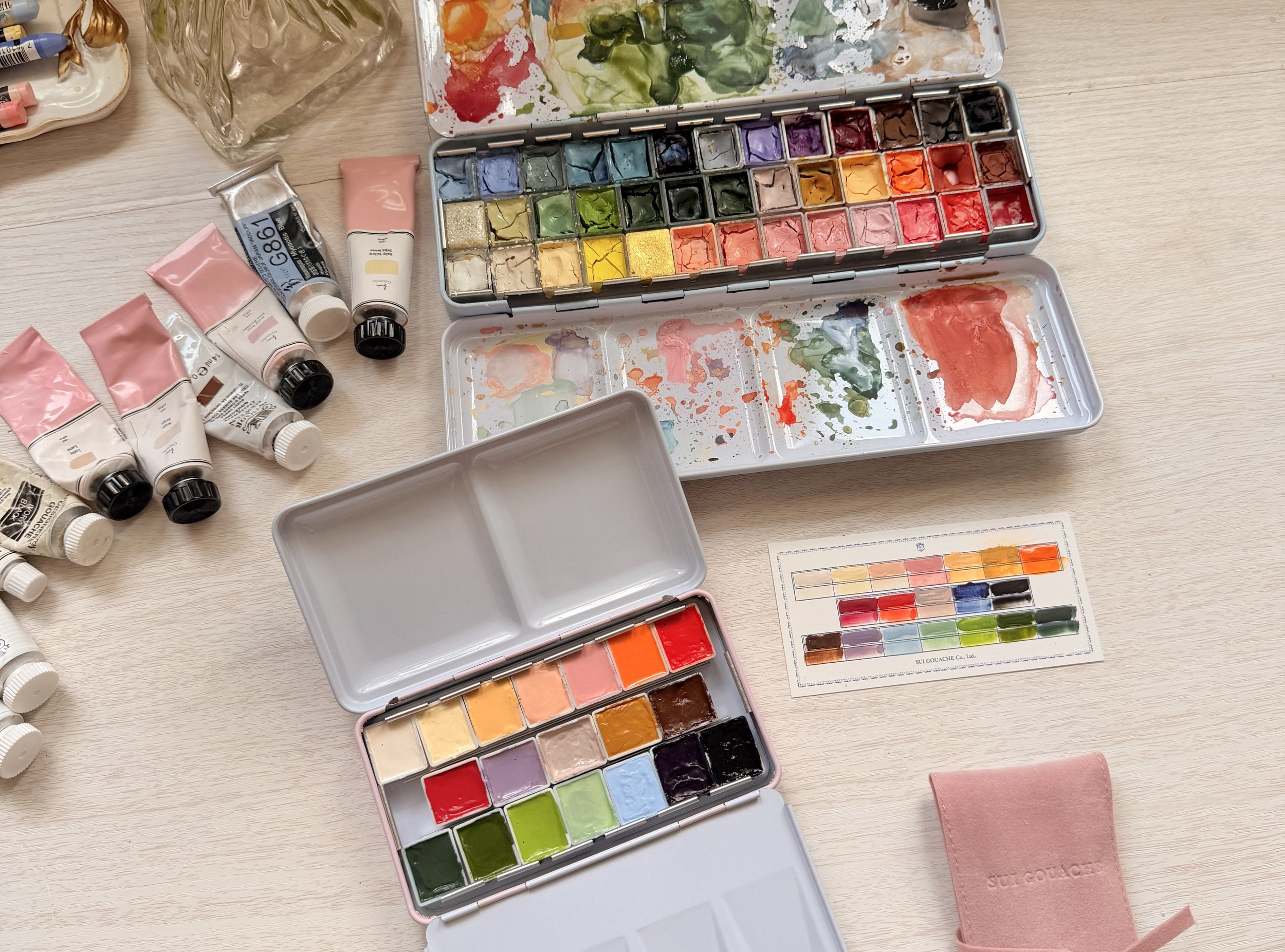
Wait, Are There Different Kinds of Gouache?
Yes and this confuses a lot of people up, so let me share briefly on it:
Traditional gouache is the classic. It uses gum arabic as it’s main binder, which is why it reactivates with water even after it dries. This is also the gouache that I use most often.
Acrylic gouache looks the same when it's dry, that same flat matte finish. But since it uses an acrylic binder, once it dries, it's set for good. That makes layering much easier since nothing underneath will lift, but it also means you can't rework it later, and you'll want to wash your brushes right away.
Jelly gouache (like the popular Himi sets) isn't really a third type, but it does behave differently. It's traditional gouache packaged in little pudding cups instead of tubes, with a softer, ready-to-use consistency that doesn't need much water to get going.
Personally, I'm not a fan of this gouache. I like to water my gouache down, and jelly gouache tends to go streaky when I do. So I'd say it's better suited to thicker, opaque painting.
One other thing worth knowing: most jelly sets are student grade, so the pigments aren't as lightfast and some colors will fade over time. Perfectly fine for sketchbooks and practice, just something to keep in mind if you're painting something you want to frame and keep.
Want to Learn More?
If you're curious about paper, the fundamentals like getting your water ratio right, and how to actually get started, I've got something for you. 😉
I put together a free Gouache Guide PDF just for beginners. ✨ Inside you'll find tips, tricks, and simple steps to help you start painting with gouache with a little more confidence. Whether you're brand new to it or just want to deepen your practice, it's a good place to begin.
And if you learn better by watching, come take a class with me! Gouache is my main medium, and my classes cover subjects like florals, landscapes, portraits, cityscapes & more, all designed for beginners & intermediate artists who want to continue exploring illustration.
Happy painting!
xx Elaine